Can I Get a Mortgage With Only One Year of Accounts?
Only have 12 months of self-employed trading history? Matthew Pigrome explains how specialist lenders can help you secure a mortgage with just one year of accounts.
By Matthew Pigrome CeMAP
Founder, Mortgage321 · Working in financial services since 1989
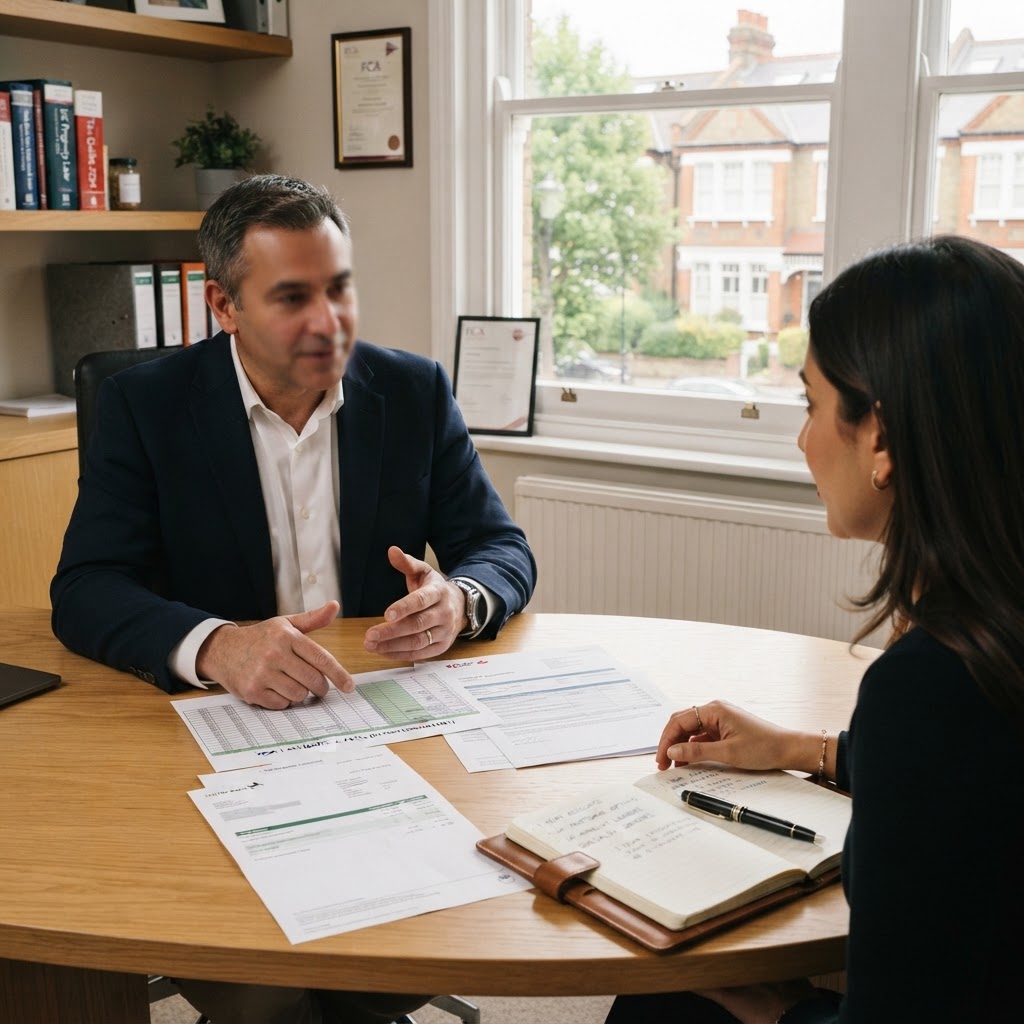
Can I Get a Mortgage With Only One Year of Accounts?\n\n
The short answer\nYes, it is absolutely possible to get a mortgage with only one year of accounts. While most high-street banks typically require two or three years of trading history to prove your income is stable, a significant number of specialist lenders are happy to assess your application based on your first 12 months of trading, provided you can demonstrate a track record of experience in your industry.\n\n
Why this is tricky\nFrom a lender's perspective, self-employment is viewed through the lens of risk and sustainability. When you are an employee, the lender assumes your salary will continue. When you are self-employed, they need evidence that your business isn't just a 'flash in the pan.' Most mainstream banks use automated 'tick-box' systems that are hard-wired to look for a three-year average of earnings. If you only have one year of figures, these systems often trigger an automatic decline because they cannot calculate a multi-year trend.\n\nFurthermore, the first year of any business often involves significant start-up costs or lower initial billings as you build a client base. High-street lenders rarely look behind the numbers to understand the context. They see a single year of modest profit and conclude that you cannot afford the loan, especially with the Bank of England base rate currently at 3.75% (September 2026), which means affordability stress tests are more stringent than they were a few years ago. Lenders are currently testing your ability to pay at rates often exceeding 8%, making every pound of your first-year profit count.\n\n
How Matthew approaches it\nIn my 35 years of advising, I’ve found that the key to a successful 'one-year' application is 'continuity of occupation.' If you were a senior project manager for ten years and then became a self-employed project management consultant doing the exact same work, specialist lenders will view your one year of accounts much more favourably. They see it as a continuation of your career rather than a brand-new, risky venture.\n\nWe start by identifying lenders who specifically cater to the self-employed and are willing to use your first year’s SA302 (Tax Calculation) as the sole basis for affordability. Instead of looking for an average, these lenders look at the 'net profit' for sole traders or the 'salary plus dividends' (and sometimes retained profits) for limited company directors. According to recent market data, some specialist providers will even consider you if you have been trading for as little as 9 to 12 months, provided your first year's tax return has been filed with HMRC Self-Employed Mortgage Requirements | Together Blog.\n\nMy role is to package your 'story' for the underwriter. We don't just send over a tax return; we provide a comprehensive CV to prove your expertise, copies of current contracts to show future income, and a clear explanation of any one-off start-up costs that might have artificially lowered your first-year profit. By presenting a 'manual' case to a human underwriter rather than an algorithm, we can often secure a mortgage that a high-street bank would have rejected out of hand.\n\n
What you'll need\nTo give yourself the best chance of approval with limited trading history, you should gather the following:\n\n* Your first SA302 and Tax Year Overview: These are the official HMRC documents that prove your declared income and that your tax is paid.\n* Business Bank Statements: Usually the last 3 to 6 months to show the 'ebb and flow' of your business income.\n* A Detailed CV: This is crucial for proving you have the experience to sustain your business in the long term.\n* Current Contracts: If you are a contractor or consultant, evidence of signed work for the next 6 to 12 months is incredibly powerful.\n* Accountant’s Certificate: A letter from a qualified accountant (ACA, ACCA, CIMA, etc.) confirming your figures and the health of the business.\n\n
Things to watch for\n* The 'Honeymoon' Effect: Lenders will check if your business bank statements show a decline in the months since your first year ended. They want to see that the business is growing, not shrinking.\n* Start-up Expenses: Be careful about how much you 'write off' against tax in your first year. While it saves you money on your tax bill, a lower net profit figure directly reduces how much you can borrow for a mortgage.\n* Gaps in Employment: If there was a long gap between leaving your old job and starting your business, be prepared to explain what you were doing during that time.\n\n
Next steps\nIf you are worried that your 'new' business status is holding you back from buying a home, don't assume a 'no' from your bank is the final word. Every business owner's situation is unique, and the specialist market is designed for exactly this scenario. You can start a chat with Molly on this page to see where you stand, or book a call with me to go through your first year's figures in detail.\n\n
\n\n
Important Notice: This article is for general guidance only and does not constitute regulated financial advice. Mortgage criteria and rates change frequently. Always consult a qualified mortgage adviser who can assess your individual circumstances. Your home may be repossessed if you do not keep up repayments on your mortgage.
In my experience, the 'one-year' hurdle is the most common reason self-employed people feel locked out of the market. The reality is that lenders aren't being mean; they're being cautious. The secret isn't just having the accounts; it's proving that your first year wasn't a fluke. If you've moved from a senior role in a company to doing the exact same thing as a consultant, specialist lenders are far more likely to see you as a safe bet than a computer algorithm at a high-street bank. I always tell my clients: don't just show them the money, show them the career that built it.
Related Expertise
Common questions
Does this sound similar to your situation?
If you'd like Matthew to look at your circumstances, start with a short enquiry.
Still have a question?
Ask Molly for general information about this topic 24/7, or speak to Mortgage321 if you would like your own circumstances assessed. Molly provides generic information only and does not provide regulated mortgage advice.
This article is general information only and does not constitute financial, tax, legal or immigration advice tailored to your circumstances. Lender criteria vary and change over time; outcomes depend on your individual position at the point of application, and historic cases do not determine future results. Mortgage321 is a trading style of Matthew Christopher Pigrome, an appointed representative of Ingard Financial Limited, authorised and regulated by the Financial Conduct Authority No. 450731. Your home may be repossessed if you do not keep up repayments on your mortgage. Where buy-to-let, commercial or bridging finance is discussed, these are not all regulated by the FCA.